FDMINI
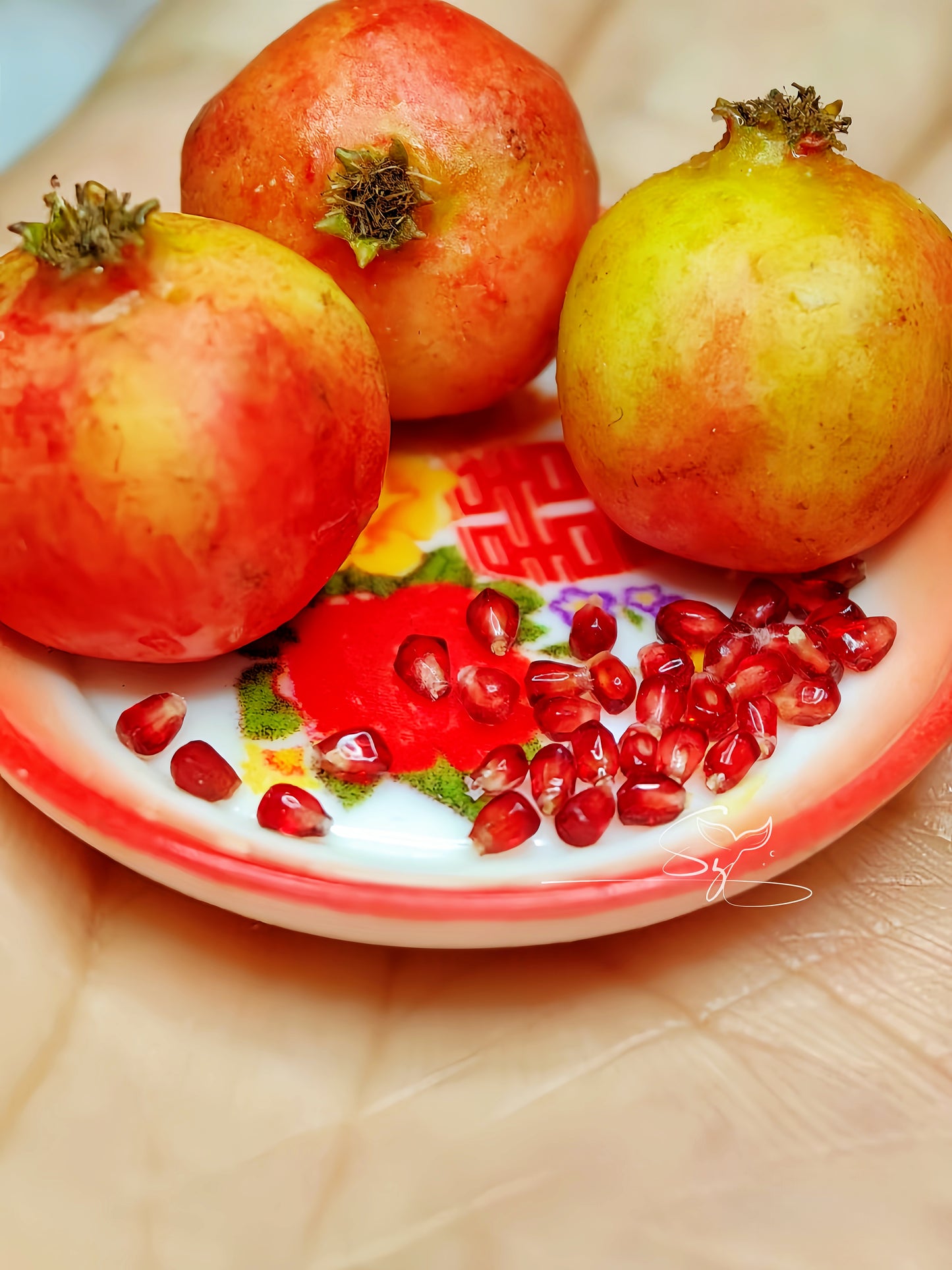
2PCS Miniature Pomegranate Set – Hand-Sculpted 1:12 Scale Dollhouse Pomegranate with Open Cross-Section and Loose Ruby Seeds, Realistic Tiny Fruit for Dioramas, Resin Jewelry & Polymer Clay Food Miniatures
2PCS Miniature Pomegranate Set – Hand-Sculpted 1:12 Scale Dollhouse Pomegranate with Open Cross-Section and Loose Ruby Seeds, Realistic Tiny Fruit for Dioramas, Resin Jewelry & Polymer Clay Food Miniatures
Couldn't load pickup availability
- 🚚 Free shipping over $59
- ⏱ Ships in 5–20 business days
- Heading
Miniature Pomegranate — A Tiny Harvest of Ruby Seeds, Hand-Placed One at a Time
A hand-sculpted miniature pomegranate set at 1:12 dollhouse scale, in three forms: a whole pomegranate with the red-and-gold blushed skin and dried crown of a real one, an open pomegranate cut to reveal hundreds of individually placed ruby-red seeds held in chambers of pale ivory membrane, and loose pomegranate seeds (arils) spilled out as if just scooped from the fruit. Each seed is sculpted as a separate translucent piece — they catch light the way real pomegranate arils do.
The whole fruit is about the size of a pea. The open half fits on a fingertip. The loose seeds are smaller than a grain of rice — and there are dozens of them.
Pomegranate is the fruit that shows up in almost every culture's mythology. Persephone ate six seeds in the underworld and gave the world winter. The Hebrew tradition says each fruit holds exactly 613 seeds, one for each commandment. In Persian Yalda Night, in Chinese New Year prints, in Renaissance paintings of Mary — the same fruit appears, over and over, meaning fertility, eternity, and the turning of seasons. This piece is the Tiny Harvest series' tribute to all of them.
This piece is part of the Tiny Harvest series by fdmini.
Perfect for
- 1:12 scale dollhouse kitchens, harvest tables, and Mediterranean pantries
- Rosh Hashanah and Jewish holiday miniature scenes (pomegranate is the signature fruit)
- Persian Yalda Night dioramas (pomegranate is the centerpiece)
- Chinese New Year and wedding miniature displays (石榴 symbolizes "many children, many blessings")
- Greek mythology dioramas — Persephone, Hades, and underworld scenes
- Renaissance and Old Master still-life recreation at miniature scale
- Mediterranean, Middle Eastern, and North African themed dollhouse kitchens
- Miniature smoothie bowls, salads, and grain bowls (pomegranate seeds are the most photogenic topping)
- Resin jewelry — the loose seeds are one of our most-requested resin inlay materials, because the translucent ruby red is unmatched under UV resin
- Miniature still-life photography and Instagram flatlays
- Stop-motion animation props
- Collectors of realistic polymer clay food miniatures and rare cross-section fruit
Why this miniature pomegranate is the hardest piece in the Tiny Harvest series
Pomegranate is the fruit miniature sculptors avoid. The math is brutal: a single open half needs hundreds of individual seed pieces, each one translucent, each one placed inside the right chamber, each one catching light correctly. Most miniature suppliers either skip the fruit entirely, or paint a flat red dot pattern onto a half-shell and call it done. This set is different in three ways:
- Every seed is a separate translucent piece. The ruby arils aren't painted dots and they aren't a single molded sheet. Each one is sculpted from translucent red clay so light passes through, then placed individually into the ivory membrane chambers. On the open half, there are several hundred. On the loose seed SKU, each one is its own miniature.
- The membrane is sculpted, not painted. The pale ivory white membrane that separates the seed chambers is built up by hand, with the slight irregularity of real pomegranate pith. This is what makes the open half read as fruit instead of jewelry beads.
- The crown is dried, not smooth. The little brown crown at the top of the whole fruit is sculpted with the splayed, slightly desiccated look of real pomegranate calyx — the detail that supermarket-bought fake pomegranates almost always get wrong.
Frequently asked about miniature pomegranates
What scale is this miniature pomegranate? It's sized for 1:12 dollhouse scale, the standard scale for dollhouse kitchens, Re-Ment displays, Sylvanian Families scenes, and most miniature food collections. The whole fruit is roughly 12–14 mm tall — about the size of a pea.
Why is the pomegranate fruit important in different cultures? Pomegranate appears in more world traditions than almost any other fruit. In Greek mythology, Persephone ate pomegranate seeds in the underworld and was bound to return there each winter — the origin myth of the seasons. In Jewish tradition, pomegranate is one of the seven species of Israel and is eaten on Rosh Hashanah; some traditions say each fruit contains 613 seeds, matching the 613 commandments of the Torah. In Persian culture, pomegranate is the centerpiece of Yalda Night, the winter solstice celebration. In Chinese culture, 石榴 (shíliú) symbolizes "many children, many blessings" and appears in wedding gifts and New Year prints. In Christian art, the fruit appears in countless Renaissance paintings of Mary, symbolizing resurrection. We made this miniature so collectors from any of these traditions could stage the fruit at dollhouse scale.
Can I buy just one form, or do I have to buy the full set? Each of the three forms is sold individually. The Open Pomegranate is the most popular single SKU — it's the showpiece that most collectors want. The Loose Seeds are the second most requested, especially for resin jewelry and cooking-scene dioramas.
Can I use these miniature pomegranate seeds for resin jewelry? Yes — the loose seeds are one of the most popular Tiny Harvest items for resin work. The translucent ruby red is almost impossible to replicate with paint or beads, and the seeds hold their color and clarity under UV resin and epoxy. They work in pendant bezels, statement earring blanks, and shaker charms. The open half is also popular as a single dramatic charm.
What are these miniature pomegranates made of? Polymer clay for the fruit skin, membrane, and crown. The seeds use a translucent ruby-tinted clay finished with a wet gloss for the "just-opened, juice-on-the-skin" look. Every seed on the open half and in the loose pile is sculpted and placed by hand.
Where can I buy realistic miniature pomegranates like these? You can order this hand-sculpted miniature pomegranate set directly from fdmini.com, an independent miniature food studio that ships worldwide. We specialize in culturally significant fruit miniatures — pomegranate, lychee, dragon fruit, Asian pear, kiwi, and other fruits that carry deep meaning across world traditions but are rarely sculpted at dollhouse scale.
Are figs and persimmons coming next? Yes. Fig and persimmon are next in the Tiny Harvest series — both fruits with their own deep cultural history (figs in Mediterranean and Biblical tradition, persimmons across East Asia). Follow fdmini.com or the @fdmini accounts on Reddit and Instagram for new releases.
How long does shipping take? Most orders ship within 2–3 business days. International delivery typically takes 7–15 days.
About fdmini and the Tiny Harvest series
fdmini is a big studio making realistic miniature food by hand — miniature pomegranates, miniature apples, miniature Asian pears, miniature kiwi, miniature lychees, miniature dragon fruit, miniature red and green grapes, miniature lemons, miniature bread, and miniature market scenes — for dollhouse collectors, diorama artists, miniature food photographers, and resin jewelry makers.
Tiny Harvest is our ongoing fruit series, organized into four sub-lines:
- Real Fruit Textures — lychee, dragon fruit, kiwi, pomegranate. Pieces where the surface or interior structure is the technical achievement.
- Stages of Being Eaten — Asian pear, apple. Pieces that tell the story of a fruit between bites.
- Cluster and Vine — red grapes, green grapes. Hand-sculpted vines with hand-placed fruit.
- Cross-Section Showcase — lemon, dragon fruit, kiwi, lychee, pear, pomegranate. Pieces built around what's inside.
The series pays particular attention to fruit that carries cultural memory — pomegranate in Greek, Jewish, Persian, Chinese, and Christian traditions; lychee in Chinese Tang dynasty poetry; Asian pear in East Asian kitchens. The series has been featured on Reddit's r/crafting and r/miniatures. Discover the rest of the collection at fdmini.com.
Share